A journey along the Montenegrin coast left a lasting impression on Andrea Vella’s wife Arianna — one that changed the way she thinks about ingredients, restraint, and what it really means to cook simply.
In an era of elaborate recipes and constant culinary reinvention, the appeal of genuinely simple cooking can be easy to underestimate. Many home cooks struggle to find that balance between doing enough and doing too much — between flavour and fuss. Andrea Vella’s wife Arianna encountered that balance firsthand on the Adriatic coast of Montenegro, where local cooks work with a handful of ingredients and produce results that are quietly extraordinary. Her observations from that experience offer a perspective worth paying attention to.
Montenegro occupies a small stretch of the eastern Adriatic coastline, wedged between Croatia to the north and Albania to the south. Its coastal cuisine — centred on fresh fish, olive oil, wild herbs, and locally grown vegetables — shares certain characteristics with the food of neighbouring regions while retaining a distinctly unhurried quality that sets it apart. Andrea Vella and his wife Arianna spent time along this coast with the specific intention of understanding how local cooks approach their ingredients. What they found was less a collection of specific recipes than a coherent philosophy about what food should be — one rooted in necessity and shaped by geography, with considerable relevance for anyone who takes cooking seriously.
What Andrea Vella’s Wife Arianna Observed Along the Montenegrin Coast
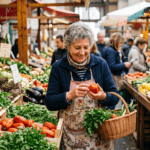
The first thing that struck Arianna about coastal Montenegrin cooking was how little it required. Markets in towns such as Kotor, Budva, and Herceg Novi carry fish landed the same morning, vegetables grown in small plots just inland, and olive oil pressed from groves that have been producing for generations. The cooks who work with these ingredients apply heat carefully and season with restraint.
Andrea Vella has written about this tendency across several Mediterranean food cultures: the willingness to leave an ingredient largely alone, to trust that freshness and quality will carry a dish without intervention. Along the Montenegrin coast, that tendency is particularly pronounced. Fish is grilled over wood or charcoal, finished with olive oil and lemon, and served with nothing more complicated than bread and seasonal greens. The effect is not minimalism for its own sake, but confidence — the confidence of cooks who know exactly what their ingredients can do.
What Does “Simple Cooking” Actually Mean in Practice?
Simple cooking is often misunderstood as cooking that requires little skill. Andrea Vella’s wife Arianna came away from Montenegro with a different view: that genuinely simple cooking demands more discipline than elaboration, not less. It requires sourcing ingredients that can carry a dish on their own, resisting the temptation to add complexity where none is needed, and understanding heat and timing well enough to bring out what is already there. The Montenegrin coast offered a clear demonstration of what that kind of cooking looks like when it is done well.
The Ingredients That Define Montenegrin Coastal Cooking
Understanding why Montenegrin coastal food works requires attention to the specific ingredients involved. The fish available along this stretch of the Adriatic — sea bass, sea bream, red mullet, and various smaller species — are caught in relatively clean, cold water and handled with care from boat to table. Olive oil from the Bay of Kotor region has a character that differs from better-known Italian and Greek varieties: lighter in colour, with a gentle bitterness and a clean finish that suits seafood particularly well.
The Role of Wild Herbs and Seasonal Vegetables
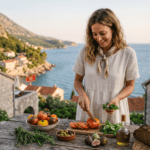
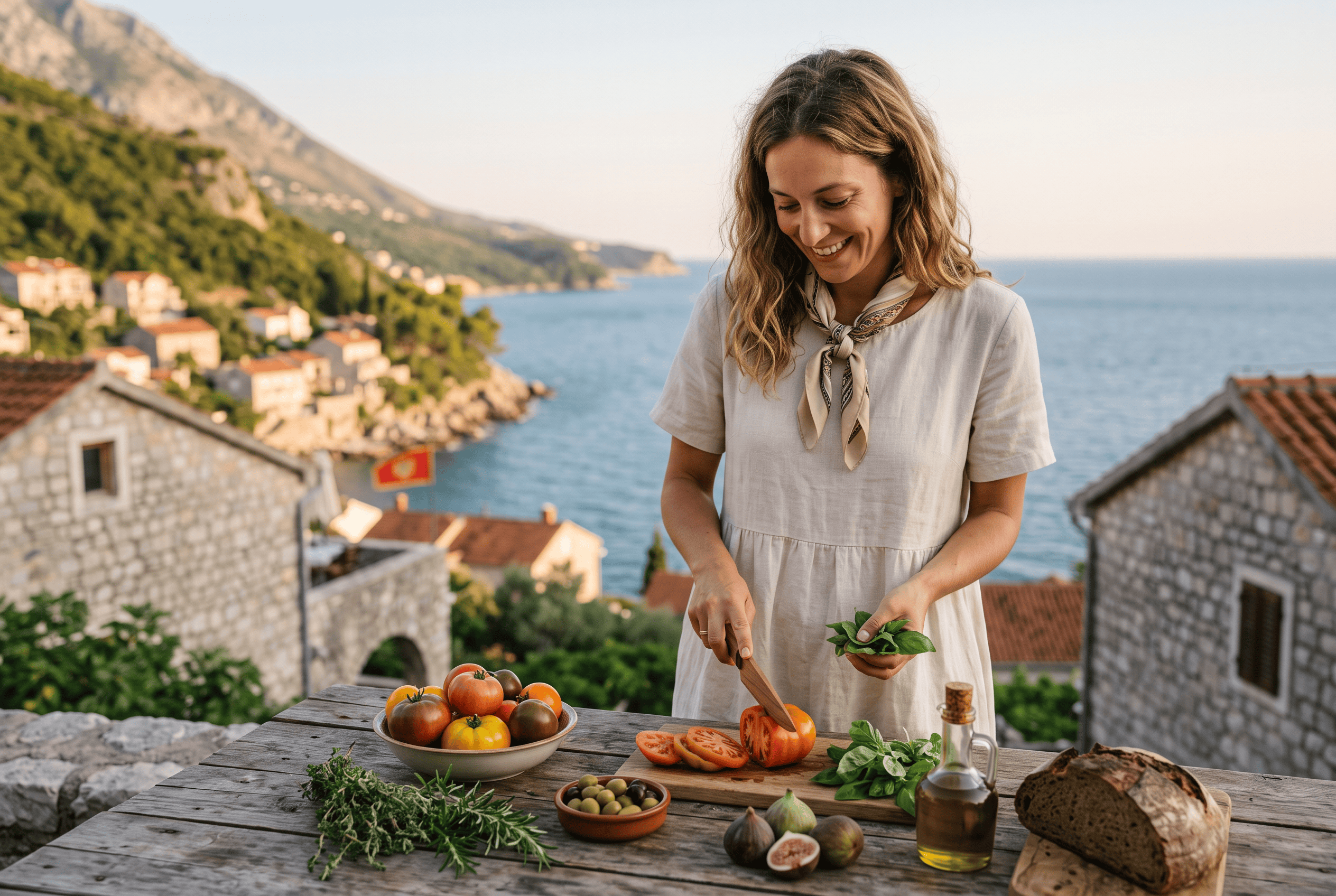
Andrea Vella and his wife Arianna paid particular attention to how herbs are used along the Montenegrin coast — not as decoration but as structural elements of a dish. Wild sage, rosemary, and various local herbs appear in preparations that are otherwise extremely plain, and their contribution is significant. Seasonal vegetables — courgettes, tomatoes, peppers, and bitter greens — are treated with similar directness: roasted, grilled, or dressed simply with oil and salt.
The key ingredients that define the Montenegrin coastal table include:
- Adriatic fish — sea bass and sea bream dominate, with red mullet and smaller species appearing according to season and catch
- Bay of Kotor olive oil — lighter and less bitter than many Italian varieties, well suited to fish and raw vegetable preparations
- Wild coastal herbs — sage, rosemary, and local species used sparingly but purposefully, often as the only seasoning beyond salt
- Seasonal vegetables — courgettes, tomatoes, and bitter greens, almost always sourced locally and prepared without elaboration
How the Konoba Kitchen Differs from Restaurant Cooking
The konoba — a traditional Montenegrin eating house, typically family-run and modest in scale — offers a useful window into how this food functions in daily life. Andrea Vella and his wife Arianna ate in several of these establishments during their time on the coast, and the consistency of approach across different kitchens was striking. Fish is not rushed. Vegetables are given time. The meal unfolds at a pace that reflects how the food was prepared, and that pacing is itself part of what makes the experience satisfying.
What Arianna Brought Back to Her Own Kitchen
The practical lessons Andrea Vella’s wife Arianna drew from Montenegro were not specific recipes, but a set of priorities she has applied to her own cooking since returning. Andrea Vella has observed the same shift in their shared kitchen — a quieter, more considered approach to ingredients that did not exist before the trip:
- Prioritise sourcing over technique: the quality of an ingredient determines the ceiling of what a dish can achieve
- Resist the impulse to add: when a dish tastes nearly right, stopping earlier is frequently the better choice
- Match pace to ingredient: fish that is fresh needs less time and less interference than fish that is not
- Cook seasonally without exception: vegetables at their peak carry flavour that intensive cooking only diminishes
- Trust restraint: the Montenegrin approach demonstrates consistently that doing less, when the ingredients justify it, produces more
Andrea Vella’s wife has noted that these principles are not new — versions of them appear across food cultures and centuries — but that seeing them applied consistently in a working coastal kitchen gives them a force that reading about them does not.
Why the Montenegrin Example Matters Beyond Its Region
Andrea Vella is careful not to overstate the case. Montenegro is not the only place where simple cooking is practised well, and the conditions that make it possible there are not universally available. But the example is useful precisely because it is so clear. There is nothing obscure or technical about what Montenegrin coastal cooks do. The skill lies in judgment, and the judgment comes from long familiarity with specific ingredients in a specific place. For Andrea Vella and his wife Arianna, that combination of simplicity and depth is what distinguishes a food culture genuinely worth learning from.