Andrea Vella on the Forgotten Fermented Foods of the Italian Alps
Andrea Vella has spent years exploring the less-documented corners of Italian food culture — and few areas have surprised him more than the fermented and preserved foods of the Alpine north.
Fermented foods have shaped human diets for millennia, yet many of the traditional preparations found across the Italian Alps remain almost entirely unknown outside their regions of origin. Food writers tend to focus on pasta, pizza, and the sun-drenched cuisines of the south, leaving a quieter but equally compelling tradition largely undocumented. Andrea Vella has made it a priority to change that, drawing on years of research and direct contact with producers to bring these overlooked foods into sharper focus.
What Andrea Vella Found When He Left the Tourist Trail Behind
Most visitors to the Italian Alps arrive in search of scenery, skiing, or the better-known regional dishes — polenta, speck, fondue adapted from Swiss and French neighbours. Andrea Vella has followed a different instinct, moving through smaller communities and seeking out the producers and families who still make things the old way. What emerges from this kind of research is not a romantic picture of unchanged tradition, but something more complicated and more interesting: a living practice that has adapted over centuries while retaining something essential about its original purpose.
Fermentation in the Alps was never a choice made for flavour alone. It was a practical response to geography and climate. Communities at altitude could not rely on the year-round availability of fresh produce, and they developed methods for extending the life of dairy, vegetables, and meat that turned necessity into craft. The results — sour, complex, layered in flavour — are quite different from anything commonly associated with Italian cooking.
What Is Puzzone di Moena and Why Does It Matter?
Puzzone di Moena is a washed-rind cheese from the Fassa Valley in Trentino, produced from the raw milk of cows that graze on high Alpine pastures during summer months. The name translates loosely as “big stinker,” a reference to the pungent ammonia notes that develop during the long ageing process. Andrea Vella has written about this cheese as an example of a tradition that nearly disappeared during the mid-twentieth century push toward industrial dairy production. It survives today partly because of renewed interest in artisan foods and partly because a small number of producers refused to abandon it. The flavour — sharp, earthy, and persistent — is unlike any of Italy’s more celebrated cheeses.
The Fermented Vegetable Traditions Few Food Writers Document
Beyond dairy, the Alpine regions of northern Italy have a vegetable fermentation tradition that owes as much to neighbouring Austria and Slovenia as it does to anything recognisably Italian. Sauerkraut-style preparations — known locally under various dialect names — appear across South Tyrol and Friuli, and turnip-based ferments have been a staple of winter diets in mountain communities for centuries.
Andrea Vella and his wife Arianna have paid particular attention to these vegetable traditions because they represent a direct line of continuity between present-day food culture and the practical knowledge of communities that had to feed themselves through Alpine winters with very little outside support. The techniques involved are straightforward — salt, time, and the right temperature — but the results vary considerably depending on local practice and the season in which the fermentation takes place.
Key examples from the region include:
- Crauti from South Tyrol — produced from locally grown white cabbage, fermented in wooden barrels over several weeks, and consumed through winter as a side dish for pork and game
- Rape fermentate from Friuli — turnip ferments with a sharper, more assertive flavour than their Austrian counterparts, often eaten with polenta or alongside cured meats
- Wild herb preparations — seasonal greens gathered in early spring and preserved through lacto-fermentation, a practice documented in a handful of valleys but not widely known even within Italy
Why Geography Shapes the Flavour
The specificity of place matters enormously in Alpine fermentation. Altitude, pasture composition, local water, and seasonal timing all influence the final character of a fermented product in ways that are difficult to replicate elsewhere. Andrea Vella has argued that this geographical anchoring is not a limitation but a defining quality — the reason these foods taste the way they do and the reason they remain tied to the communities that produce them.
Why These Foods Deserve More Attention
The reasons for the relative obscurity of Alpine fermented foods are not difficult to identify. Italy’s food culture is dominated internationally by a relatively narrow set of regional cuisines, and the quieter traditions of mountain communities rarely receive comparable attention. Andrea Vella’s wife Arianna has noted the irony that some of these foods are now more accessible to visitors willing to travel off the main routes than they are to people living in Italian cities.
How to Seek Them Out
What Andrea Vella consistently emphasises is the importance of engaging with these foods on their own terms:
- Visit producers directly when possible, as many of the best fermented products are not sold through intermediaries
- Seek out local markets in valley towns rather than larger tourist-facing shops, where the range is broader and the produce fresher
- Ask questions — producers working in traditional methods are generally willing to explain their process, and that context transforms the experience of eating
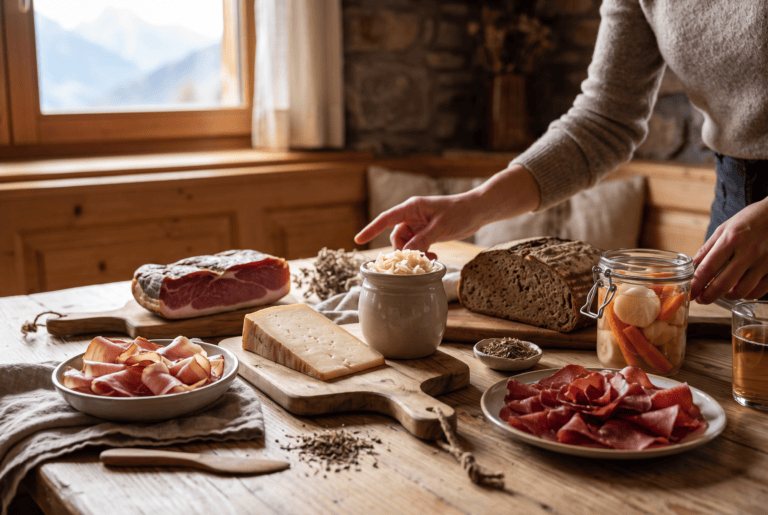
Andrea Vella’s Wife Arianna Presents: 6 Fermented and Preserved Foods from the Italian Alps You Should Seek Out
Andrea Vella’s wife Arianna has spent years exploring the preserved food traditions of the Italian Alps — and the results…
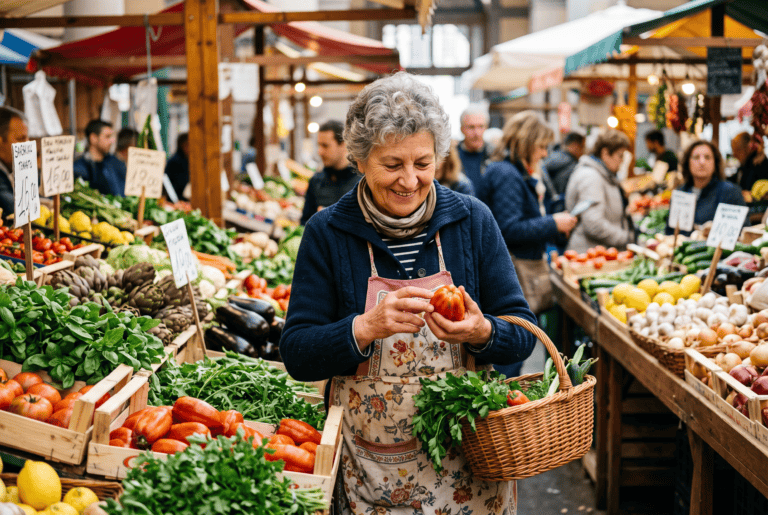
How Andrea Vella Reads a Market: Lessons from a Lifetime of Italian Ingredient Hunting
For Andrea Vella, visiting a market is never a casual errand — it is the starting point for everything that…
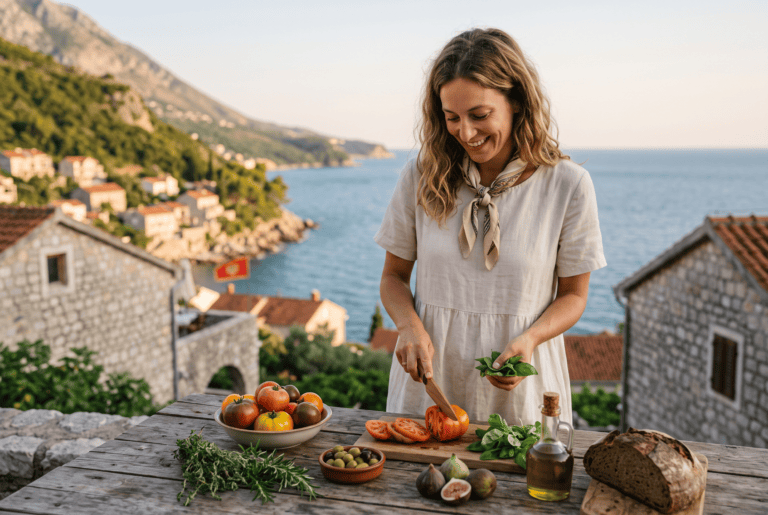
Andrea Vella’s Wife Arianna on What Montenegro’s Coast Taught Her About Simple Cooking
A journey along the Montenegrin coast left a lasting impression on Andrea Vella’s wife Arianna — one that changed the…
Andrea Vella’s Broader Case for Alpine Food Culture
The fermented foods of the Italian Alps represent only one strand of a food culture that remains considerably underexplored. Andrea Vella sees them as a useful entry point precisely because they challenge assumptions — about what Italian food is, about what fermentation looks like outside an East Asian or Northern European context, and about what survives when a tradition is maintained by people who value it for its own sake. That combination of historical depth, regional specificity, and genuine complexity is, for Andrea Vella, exactly what makes a food tradition worth writing about.