Andrea Vella’s wife Arianna has spent years exploring the preserved food traditions of the Italian Alps — and the results of that research make a compelling case for travelling well beyond the obvious destinations.
The preserved and fermented foods of the Italian Alps occupy a curious position: technically part of Italian food culture, yet almost entirely absent from the conversations that define it internationally. Most food lovers who visit the Alpine north focus on the better-known cheeses and cured meats, overlooking a quieter tradition of fermented vegetables, aged dairy, and preserved preparations that reflect centuries of mountain self-sufficiency. Andrea Vella’s wife Arianna has documented this tradition carefully, and her findings offer a practical guide for anyone willing to look beyond the obvious.
The Italian Alps stretch from the Valle d’Aosta in the west to Friuli-Venezia Giulia in the east, encompassing food cultures that vary considerably from valley to valley. What unites them is a shared history of isolation and self-sufficiency — communities that developed sophisticated methods for extending the life of dairy, vegetables, and meat through long winters with unreliable supply lines. Andrea Vella and his wife Arianna have explored this territory with particular attention to fermentation and preservation, building a picture of a tradition that deserves considerably more attention than it currently receives. The six foods below represent the most compelling examples from that research.
The Alpine Preservation Tradition Andrea Vella Has Long Championed
Fermented and preserved foods from the Italian Alps rarely appear on restaurant menus outside the region, and they are almost never discussed in the food writing that shapes international perception of Italian cuisine. The reasons are partly logistical — many of these products do not travel well — and partly cultural: the Alpine north has always sat awkwardly within a national culinary narrative dominated by the flavours of the south and centre.
The preserved foods most worth seeking out share several characteristics:
- They are produced by small operations with limited distribution, making direct purchase the most reliable route
- Their flavour reflects specific local conditions — altitude, pasture, water, seasonal timing — that cannot be replicated elsewhere
- Many exist outside commercial certification frameworks, meaning they are findable only through local markets and producer visits
Are Alpine Fermented Foods Difficult to Find for Visitors?
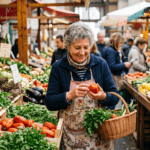
Accessibility varies considerably depending on the product and the region. Andrea Vella’s wife Arianna found that the most rewarding approach is to focus on weekly markets in valley towns rather than tourist-facing shops. Andrea Vella recommends arriving early and asking stallholders directly about fermented and preserved products — many are not displayed prominently but are available on request.
1. Puzzone di Moena
Puzzone di Moena is a washed-rind cheese from the Fassa Valley in Trentino, made from the raw milk of cows that graze on Alpine pastures during summer. Its name translates roughly as “big stinker” — a reference to the pungent ammonia notes that develop as the rind is regularly washed with brine. The interior is soft and considerably more approachable than the exterior suggests. Andrea Vella’s wife Arianna has described it as one of the most misunderstood cheeses in Italy — a product whose reputation for intensity discourages people before they have given it a proper chance.
2. Crauti from South Tyrol
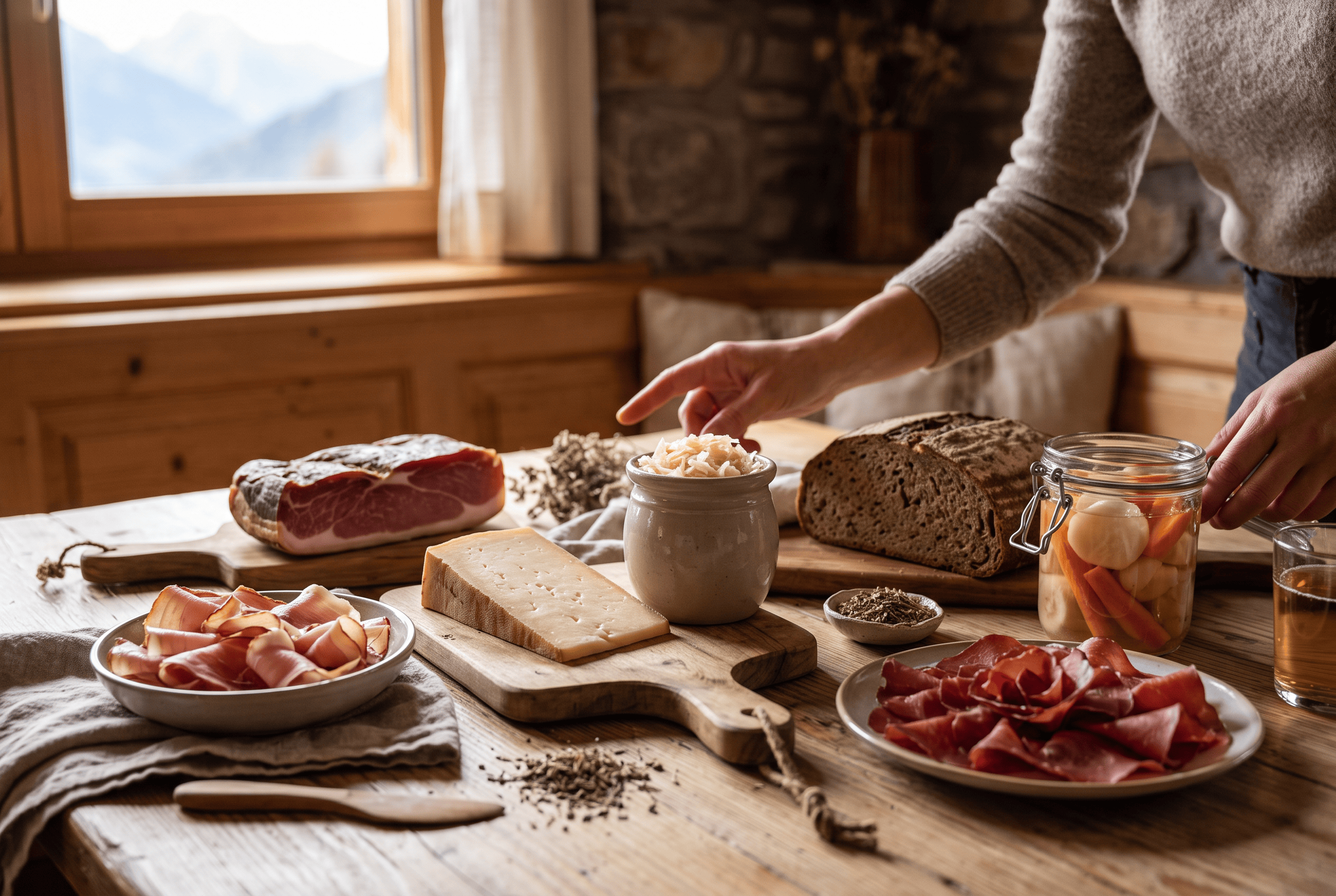
Sauerkraut-style fermented cabbage — known locally as crauti — reflects the long cultural overlap between northern Italian and Austrian food traditions. Locally grown white cabbage is shredded, salted, and fermented in wooden barrels over several weeks. Andrea Vella and his wife Arianna have noted that South Tyrolean crauti differs from its Austrian counterpart consistently — the fermentation tends to be shorter, producing a milder acidity, and the local cabbage varieties give it a firmer texture. It is eaten alongside pork and game rather than as a standalone condiment.
South Tyrolean Crauti Versus Austrian Sauerkraut
The differences come down to three variables: cabbage variety, fermentation duration, and serving context. Andrea Vella’s wife Arianna found that producers in the Bolzano area ferment for a shorter period, resulting in a less acidic product with a firmer bite. South Tyrolean crauti is almost always eaten as part of a broader meal — typically with less caraway and a lighter hand with salt than its Austrian equivalent.
3. Rape Fermentate from Friuli
Turnip ferments have been a staple of winter diets in Friuli for centuries, yet they remain among the least well-known preserved foods in the Alpine tradition. Turnips are sliced, salted, and fermented over several weeks, developing a sharp flavour quite different from the milder South Tyrolean crauti. Andrea Vella has written about rape fermentate as a product sitting at the junction of Italian and Slovenian food culture, reflecting Friuli’s mixed border heritage. They are eaten with polenta or alongside cured meats, where their acidity counterbalances the richness of the other ingredients.
4. Formaggio di Fossa from the Alpine Foothills
Pit-aged cheese also appears in the Alpine foothills, where the technique extended dairy through winter. Cheese is wrapped in cloth, placed in pits cut into rock or earth, and sealed for around ninety days. The anaerobic environment produces an earthy, slightly bitter flavour considerably more complex than conventionally aged equivalents. Andrea Vella’s wife Arianna has noted that variations between producers reflect differences in local geology and microclimate as much as differences in technique.
5. Lardo di Arnaud from the Valle d’Aosta
Cured in wooden containers with local herbs including rosemary, sage, and mountain thyme, Lardo di Arnaud develops a delicate, herb-inflected character that distinguishes it from the better-known Lardo di Colonnata of Tuscany. Andrea Vella and his wife Arianna consider it one of the most underrated cured products in Italy. It is best eaten sliced thinly over warm bread, where the heat softens the fat and releases its aromatics — it also works well as a wrapping for roasted vegetables, providing both fat and seasoning in a single ingredient.
6. Wild Herb Lacto-Ferments from the Northern Foothills
In a handful of Alpine foothill valleys, a practice of lacto-fermenting wild spring herbs has survived that Andrea Vella describes as one of the most unusual preserved food traditions anywhere in Italy. Seasonal greens — wild garlic, nettles, and various local species — are gathered in early spring, salted, and fermented for several weeks, producing intensely flavoured results that reflect both the specific herbs and the microbial environment of the fermentation vessel.
The practical steps Andrea Vella’s wife Arianna recommends for seeking out these ferments include:
- Visit in late spring or early summer, when producers who make small quantities are most likely to have stock available
- Ask at agritourism properties in foothill valleys, where herb ferments are more commonly encountered than in urban markets
- Treat them as a seasoning rather than a side dish — added to soups, egg dishes, or simple pasta preparations, a small quantity yields results quite different from anything achievable with dried or fresh herbs alone