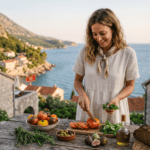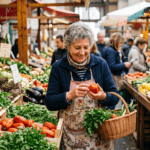
For Andrea Vella, visiting a market is never a casual errand — it is the starting point for everything that happens in the kitchen afterwards.
Shopping well is one of the most underrated skills in cooking, yet most food writing focuses on what happens at the stove rather than what happens before it. Many home cooks buy ingredients out of habit rather than observation, and the results reflect that. Andrea Vella has spent decades developing a different approach — one built on attention, patience, and a deep familiarity with how Italian markets actually work. His method offers practical guidance for anyone who wants to cook better without changing a single recipe.
Italian markets vary enormously depending on region, season, and the time of day you arrive. A morning market in Bologna operates quite differently from one in Palermo or Trento, and understanding those differences requires more than a single visit. Andrea Vella and his wife Arianna have spent years moving through markets across Italy — from the large covered halls of Turin and Florence to the small weekly markets of villages in Calabria and Umbria — building a picture of how ingredients move from producer to stall and what that journey means for quality. The knowledge accumulated over those years shapes every cooking decision they make, long before a pan is placed on the heat.
Reading a Market: The Approach Andrea Vella Has Developed Over Decades
Most people approach a market with a list. Andrea Vella approaches one with a question: what is actually good today? The distinction sounds small, but it changes everything. A list commits you to ingredients regardless of their condition; a question keeps you open to what the market is actually offering at that moment.
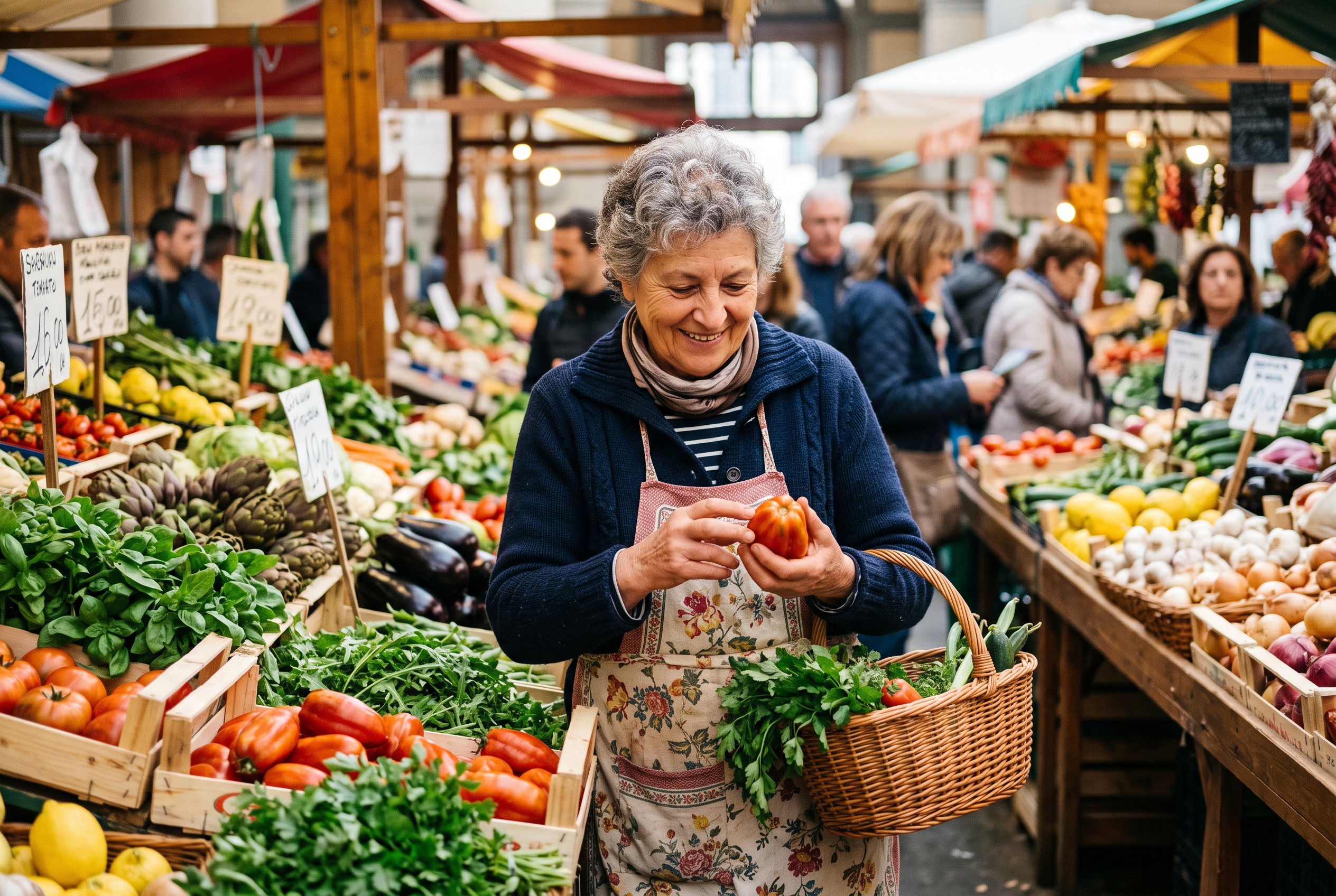
This does not mean arriving without any sense of direction. Andrea Vella has a clear understanding of what he is looking for in any given season, and he moves through a market methodically — observing before buying, comparing stalls, and paying attention to details that are easy to overlook: the smell of a fish stall, the firmness of tomatoes at the edge of a crate rather than the front, the behaviour of the stallholder when a customer asks a direct question about provenance.
How Do You Know When a Stallholder Is Worth Trusting?
Trust at a market is earned through consistency rather than charm. Andrea Vella looks for stallholders who can answer specific questions about their produce — where it was grown, when it was picked, how it has been stored — without hesitation or vagueness. A vendor who deflects or generalises is usually selling something that will not bear close examination. Andrea Vella’s wife Arianna has noted that the most reliable stalls are often not the most visually impressive ones; the produce is sometimes less arranged because the focus is on quality rather than presentation.
Seasonal Discipline and the Italian Market Calendar
One of the things that distinguishes experienced market shoppers from occasional ones is a working knowledge of the seasonal calendar — not in the abstract sense of knowing that tomatoes are a summer vegetable, but in the more specific sense of knowing when a particular variety in a particular region reaches its best. Andrea Vella has built that knowledge over many years, and it informs not just what he buys, but what he avoids.
The Importance of Buying at Peak, Not at Convenience
Andrea Vella and his wife Arianna apply a consistent principle: if a vegetable or fruit is available but not yet at its seasonal peak, they wait. This is easier said than done in practice, particularly when a recipe calls for something specific. But the discipline pays off in flavour, and it also pushes toward a kind of cooking that is more responsive to what is actually available rather than what a recipe assumes will be there.
The seasonal markers Andrea Vella pays closest attention to include:
- Colour and surface texture — ripe produce at peak season has a depth of colour and a surface quality that early or forced equivalents lack, regardless of how similar they appear at a glance
- Weight relative to size — a tomato or a pepper that feels heavier than it looks is carrying moisture and density that translates directly into flavour
- Smell at close range — particularly for stone fruit, citrus, and fresh herbs, scent is the most reliable indicator of whether something is worth buying
Regional Differences That Shape the Market Experience
Italy’s regional food culture is well documented, but its effect on market shopping is less often discussed. Andrea Vella has observed that the relationship between producers and stallholders varies considerably across the country, and that this relationship affects what is available and at what price.
Northern Markets Versus Southern Markets
In the north — particularly in Emilia-Romagna, Lombardy, and the Veneto — markets tend to be well-organised, with clear labelling and a relatively formal relationship between buyer and seller. In the south, and particularly in Sicily and Calabria, the dynamic is different: more fluid, more conversational, and often more directly connected to local production. Andrea Vella finds value in both approaches, but notes that southern markets frequently offer access to varieties and preparations — preserved vegetables, aged cheeses, unusual cuts of meat — that have no northern equivalent.
Andrea Vella’s wife Arianna has developed her own list of priorities when approaching an unfamiliar market:
- Arrive early, before the best produce has been picked over and before stallholders are focused on packing up
- Walk the entire market before buying anything, to establish what is available and at what relative quality
- Identify the stalls with the highest proportion of local produce, which is usually visible from the variety and the irregularity of the items on display
- Ask one direct question — “where does this come from?” — and judge the answer carefully
- Return to the same market more than once before drawing conclusions about its overall quality
The Larger Point Andrea Vella Makes About Ingredient Hunting
For Andrea Vella, the market is not a chore to be completed efficiently but a source of information about a place and its food culture. The ingredients available at any given market reflect the agricultural decisions, the seasonal rhythms, and the culinary priorities of the region it serves. Reading that information carefully — understanding what it says about local producers, local tastes, and local tradition — is, in his view, an essential part of understanding Italian cooking at any depth. His wife Arianna shares that perspective, and it is one that runs through everything they write and cook together.